
A gas smell needs an outside emergency call
Leave the home without touching switches and call the gas utility or 911 from outside when you smell gas. Do not try another burner, unplug the range, or use a phone indoors. New Jersey Natural Gas tells residents to evacuate, avoid electrical devices, and stay out until the utility declares the building safe.
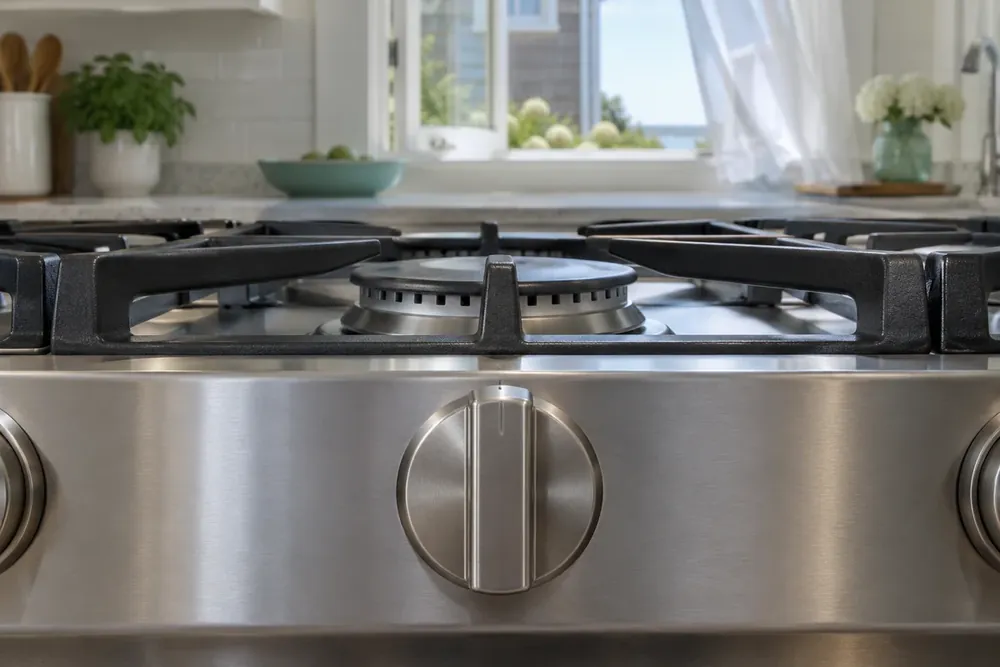
For gas range repair near me, the repair call belongs after the emergency call when a leak is suspected. Gas connections, valves, and ignition parts need professional diagnosis. Leave gas lines and burners alone; a loose connection or attempted adjustment can create another leak.
Safe to try during an appliance call
Simple checks are appropriate only when there is no gas odor, smoke, sparking, or other immediate hazard. Call us about the appliance problem; safe checks can run while you are on the phone, and the conversation never waits for a checklist.
Safe to try
- Read the selected cycle, temperature, and control-lock setting.
- Look at an accessible outlet and cord without moving the appliance or touching damaged parts.
- Observe a breaker handle from a dry, clear position; leave panel covers closed.
- With the unit unplugged, remove loose lint from its removable screen or visible debris from an accessible opening.
- Look for a food package holding a door open, or residue on a door seal.
- Check the position of an accessible water supply valve without forcing it.
Call us
- Stop using an appliance that smells burned and call us about the odor.
- Leave an appliance off when sparks appear or a breaker trips repeatedly, and call us.
- Keep clear of water inside an appliance cabinet and call us about the leak.
- Leave panels, wiring, and sealed refrigerant components untouched and call us for diagnosis.
If there is smoke or an active fire, leave and call 911 outside. Do not reach through smoke to disconnect anything.
Dryer heat and burning odors need attention
A dryer with a burning smell should stay off while you call us. The Consumer Product Safety Commission explains that accumulated lint can block airflow, build heat, and cause a fire. Cleaning the removable lint screen is a safe task on an unplugged machine. Duct disassembly and lint inside the cabinet belong with your technician.
Sparks and repeated trips need diagnosis
Sparks, hot insulation odors, and frequent breaker trips are electrical warning signs identified by the Electrical Safety Foundation International. Do not keep resetting a breaker or plug the appliance into another outlet to repeat the fault. Call us about the appliance; outlet or household wiring faults need an electrician.
Whirlpool electric stove repair involving a heating circuit belongs with your technician. For Whirlpool gas oven repair, leave ignition and fuel components untouched and call about the symptoms.
Carbon monoxide can have no smell
Carbon monoxide is an odorless, colorless gas produced by incomplete fuel burning, according to the CPSC. Install CO alarms on each level and outside sleeping areas, following the alarm instructions. Never use a range or oven to heat the home.
A CO alarm or suspected poisoning means get outside and call 911; do not search for the source. Samsung gas stove repair involving combustion problems requires professional attention after responders address the emergency.
Cabinets and refrigerant circuits stay closed
High-voltage components and refrigerant circuits need professional service even when the appliance is unplugged. The CPSC warns that microwave electrical parts can still cause serious injury after disconnection. Leave the cover on and call us about microwave faults.
The Environmental Protection Agency requires Section 608 certification for service that could release regulated refrigerants. Do not puncture tubing, add refrigerant, or bypass electrical controls; call for refrigerator repair. One of our local appliance repair partners explains the proposed work and its price before repairs begin.